

Custom Seed Image

There are many reasons why people need images of specific seeds, samples or seed collections. For example, after the seed lab tests a sample, a test report is provided, but the client needs to see what the contaminant seed looks like. As customers plan their cleaning process or plan to re-clean the lot, an image of what they need to separate can be critical.
This is especially important in small-seeded crops, such as grasses and clovers, and less familiar crops such as native species, where seeing unique and fine features is necessary to make decisions.
Example: Single contaminants that vary from the crop seeds
Figures 2 and 3 show a single kind of contaminant with clear physical differences between the crop seed and the undesirable seed. Each image includes a scale to interpret size, shape and other differences. Note that there are several seeds of the crop species to illustrate the range of seed sizes. These features can help the user to decide if, or how, these seeds can be separated.

Figure 2. Wild carrot seeds found in a red fescue sample.
The contaminant seems very different in surface texture and length but has similar width to the crop seeds.

Figure 3. Rough hawkbit found in a creeping bentgrass sample.
The great difference in length between the two species means that this separation should be quite easy and result in very little loss of bentgrass seed.
Example: Contaminant is similar in size and shape to the crop seeds
Figure 4 illustrates a situation where there is very little difference between the crop seed and the undesirable material, and mechanical separation is likely impossible. By seeing this image a grower may realize the value of contaminant prevention in the field.
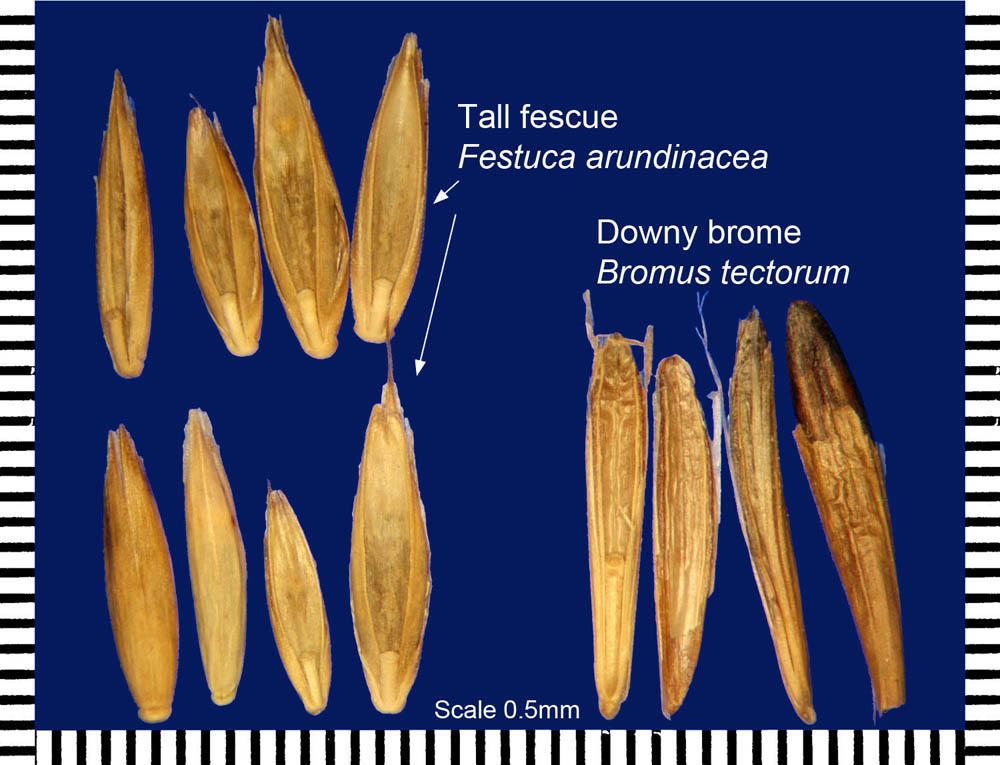
Figure 4. Downy brome found in a sample of tall fescue.
It is likely that even with the best equipment these seeds cannot be separated.
Example: Multiple contaminants
Figure 5 illustrates a variety of cleaning challenges. An image like this one can help a cleaner and grower to communicate and plan preventive and corrective measures. Good communication and planning of specific actions simply based on words would be difficult. An image like this solves that problem.

Figure 5. Multiple contaminants found in a white clover sample.
Although it may be possible, based on size and shape, to clean out the red clover and buckhorn plantain, it will be almost impossible to clean out the sheep sorrel and alsike clover.
Example: Sample diversity
Figure 6 illustrates a different situation where the customer may want to see all the seeds present in the sample, or perhaps wants to show a diversity of seed kinds present in a collection, a natural stand, or re-vegetation project.

Figure 6. Variety of crops and weeds present in a Shasta daisy sample.