

Soil (Compost and Soil-Mix) Seed-Bank
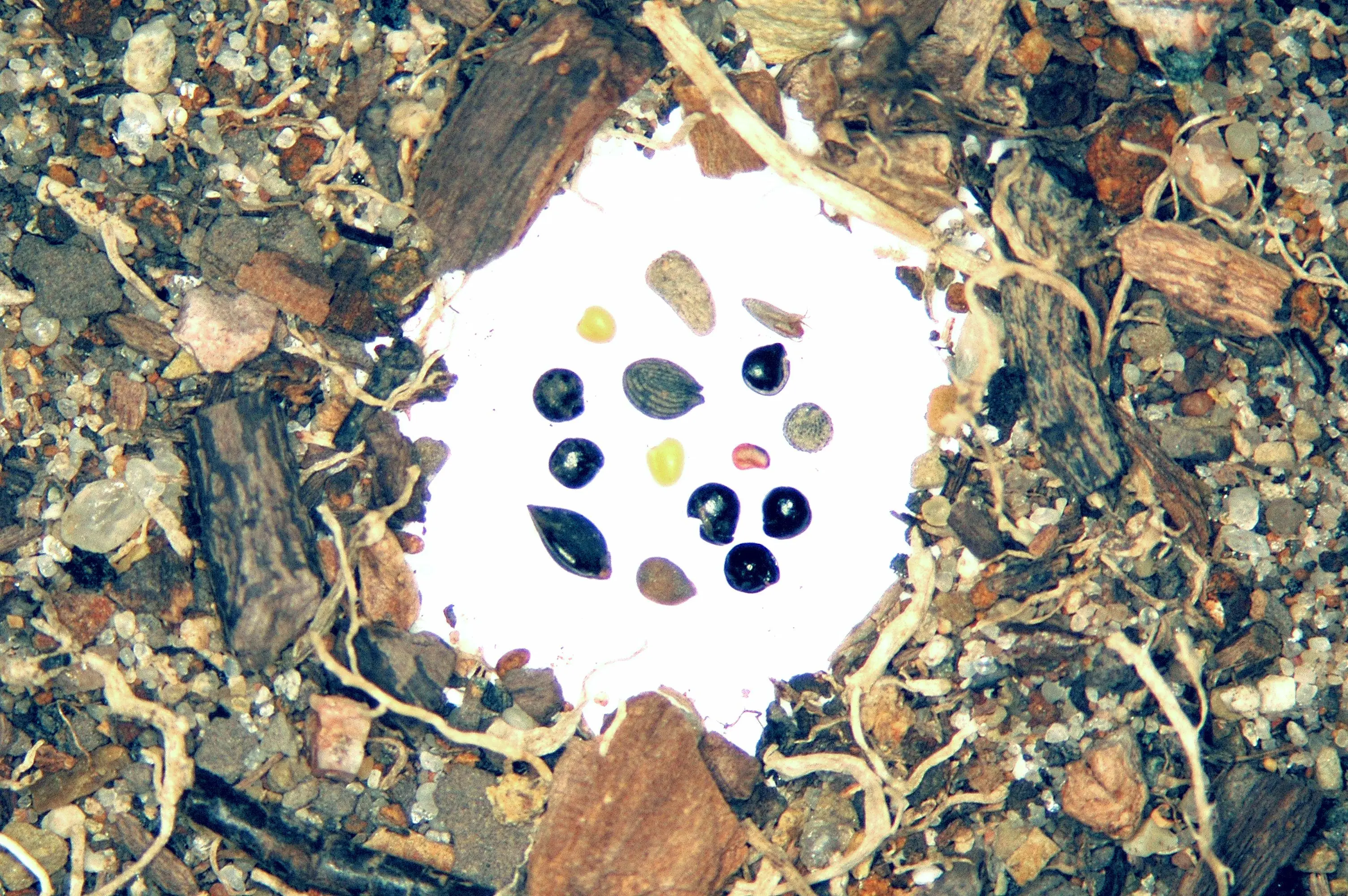
Farmers, agronomists, weed and soil scientists, conservation programs, and others often want to know what kind of seeds may be present in a particular soil to prevent potential problems in today's quality-conscious markets. The soil seed-bank test can effectively identify noxious weed seed or any other seeds in a soil sample.
The soil seed-bank test was developed by the OSU Seed Laboratory. Samples are washed to remove fine clay particles, dried, then screened to separate by particle size. Seeds as small as Juncus (rush) can be retained. All particles are visually inspected by trained analysts. Seeds are removed and identified. The seeds may then be returned to the customer for follow-up studies or tested in the lab for viability.
Examples of recent tests:
- Soil samples were submitted to find and identify all species of seeds including invasive species.
- Soil samples collected from a large number of sites in the Mojave Desert were searched for seeds. Seeds were recovered and returned to customer for follow-up studies.
- Samples were submitted from a residue management program. Seeds were separated, identified, weighed, and the number of each species present was provided to the researcher. Visible nematode galls and ergot were also removed and reported.
- Compost samples were searched for seeds and foreign material such as glass, plastic, metal, and stones.
Submitting Soil Seed-Bank Samples to the Lab:
- Please note:
- Additional hourly charges may apply for extremely difficult samples or if a larger sample needs to be searched. Please contact the lab if you have a large quantity of samples for testing.
- If the sample may be contaminated with a known chemical, please contact the Lab first. We can only accept samples that we can safely test in our facility. The lab does not accept samples contaminated with animal or human waste.
Sample may be dry, damp, or wet according to field conditions.
- Minimum submitted sample size: Please limit sample size to approximately 450 grams (.8-1.0 lbs). Please do not submit soil samples larger than 1.0 lb. (Additional prep. charges may apply for samples larger than 1.0 lb.)
- Enclose in a moisture-proof container, such as a heavyweight Ziplock bag or plastic container with a tightly fitting lid. Double bag if sample contains sharp material that may puncture a bag. If sample is wet, ship it to the Lab overnight or the fastest way possible to reduce the risk of seed sprouting in transport.
Test Information
- We report seeds found by kind and number in a 100g subsample of the submitted sample. (Results are typically available within one to two weeks, depending on the Lab's testing volume and sample difficulty.)
- If requested, seeds found can be returned (for a return charge, plus shipping) to the customer for follow-up studies.
- Additional tests can be requested to determine the viability of some of all of the seeds found (additional charges apply):
- Determined by Tetrazolium (tz) test. The test results are usually available within 24-48 hours after seed retrieval and identification. This test detects if seeds are dead or alive.
- Determined by Germination (g) test. The test may take three to six weeks or longer due to dormancy or other conditions. Some seeds may not germinate at all due to age, weathering, or other deterioration.